Experiencing numbness, tingling in your fingers, or strange “pins and needles” sensations after a car accident is never something to ignore. These symptoms could be a sign of nerve damage — a serious condition that, left untreated, can lead to chronic pain, weakness, and even permanent disability. At Your Injury Practice, we connect car accident victims with experienced chiropractors and medical specialists who accept no-fault insurance, so you can get the diagnostic testing and treatment you need without worrying about medical bills. This article explains why numbness and tingling after a car accident happens, what types of nerve injuries are common in car accidents, how doctors diagnose nerve damage, and what treatment options are available. If you’ve suffered nerve damage following a car crash or even suspect you have understanding what’s happening in your body is the first step toward recovery and protecting your no-fault claim.
What Causes Numbness and Tingling After a Car Accident?
Numbness and tingling after a car accident occur when the nerves that carry signals between your brain and the rest of your body become compressed, stretched, or torn. The violent forces of a car crash — sudden deceleration, seatbelt restraint, airbag deployment, and bodily impact with the steering wheel or door — can easily injure the spine, soft tissues, and nearby nerves. When a nerve is irritated or damaged, the signals it sends to the brain become disrupted, producing the familiar sensation of tingling, burning, or numbness in the affected area.
Car accidents often cause these sensations because the spine and peripheral nerve pathways are particularly vulnerable to whiplash and trauma. A herniated disc pressing against a nerve root, a pinched nerve in the neck or lower back, or compression of nerves in the arm or leg can all produce tingling or numbness within hours, days, or even weeks after an accident. Some accident victims experience numbness immediately after a car crash, while others develop symptoms gradually as inflammation builds around damaged nerves. Either way, these symptoms warrant prompt medical attention.
What Is Nerve Damage and How Does It Happen in Car Crashes?
Nerve damage refers to any injury that disrupts the structure or function of a nerve, whether through compression, stretching, laceration, or inflammation. Your nervous system is divided into the central nervous system — your brain and spinal cord — and the peripheral nerve network that branches throughout your body. Nerve damage can occur anywhere along this pathway, and the location of the injury largely determines which symptoms you’ll experience. Damage to nerves near the spinal nerve roots, for example, can produce radiating pain, weakness, and tingling in your extremities.
In a car accident, nerve injuries often happen through one of several mechanisms. The sudden whip-like motion of whiplash can stretch the nerves in the neck. A herniated disc can compress a spinal nerve. Direct impact can bruise or sever nerves. In severe cases, broken bones or deep lacerations cause severed nerves that require surgical repair. The type of nerve affected — sensory, motor, or autonomic — determines whether you experience numbness, weakness, or problems with involuntary functions like sweating and blood pressure regulation. Severe nerve damage can be permanent if not treated promptly.
What Are the Common Signs and Symptoms of Nerve Damage?
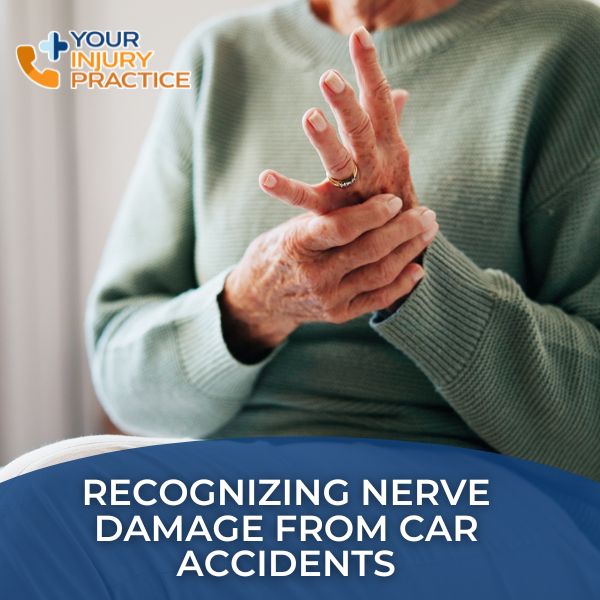
The signs and symptoms of nerve damage vary depending on which nerves are affected and how severely. Common symptoms include numbness, tingling sensations, a burning or shooting pain, muscle weakness, and loss of coordination. Many accident victims describe tingling in the hands, hand numbness, or a “pins and needles” feeling that comes and goes. Others experience sharp, electric-shock-like nerve pain that radiates from the spine down into an arm or leg. Some people notice that their hand or fingers feel cold, clumsy, or unresponsive when they try to grip objects.
More serious nerve injuries can cause persistent muscle weakness, loss of reflexes, or complete loss of sensation in part of the body. Nerve damage can affect bladder and bowel control in cases involving the spinal cord, which is a medical emergency. Symptoms include numbness that doesn’t improve, tingling and numbness that spreads, or weakness that interferes with daily tasks like writing, dressing, or walking. If you’re experiencing numbness and tingling shortly after a car accident — or developing new symptoms in the weeks that follow — you should see a doctor right away.
What Types of Nerve Injuries Are Common in Car Accidents?
Several types of nerve injuries are common in car accidents, and understanding them helps explain why your symptoms feel the way they do. A pinched nerve, often caused by a herniated disc or muscle spasm pressing against a nerve root, is one of the most frequent diagnoses we see. Whiplash injuries commonly produce nerve compression in the cervical spine, leading to tingling in your fingers, neck pain, and headaches. A pinched sciatic nerve — where the sciatic nerve runs from the lower spine through the buttock and down the leg — can produce shooting nerve pain, numbness, and weakness in the leg or foot.
Peripheral nerve injuries are also common, particularly in the arms when drivers brace against the steering wheel during impact. The nerves in the arm can be stretched or compressed, producing weakness, tingling, or numbness in the hand or fingers. In more violent crashes, spinal nerve damage or even spinal cord injury can occur, producing widespread neurological symptoms that require immediate emergency care. Diagnosing nerve damage accurately is essential because the right treatment depends entirely on identifying which type of nerve has been affected.
How Do Doctors Diagnose Nerve Damage After a Car Accident?
To properly diagnose nerve damage, the providers in the Your Injury Practice network start with a detailed history of the accident and a thorough neurological examination. The doctor will test your reflexes, muscle strength, and sensation in different areas of your body to identify which nerves may be involved. They’ll also ask about the exact location, timing, and quality of your symptoms — whether you have numbness or tingling, burning, sharp shooting pain, or weakness. Documenting these findings shortly after a car accident is critical for both your treatment and your no-fault insurance claim.
Imaging and specialized testing confirm the diagnosis. MRI scans are particularly useful for identifying a herniated disc, spinal cord injury, or compression of a nerve root. For peripheral nerve injuries, doctors often order nerve conduction studies and electromyography (EMG), which measure how well electrical signals travel through your nerves and muscles. Nerve conduction testing can pinpoint exactly where a nerve is damaged and how severe the injury is. These objective tests are essential for diagnosing nerve damage and provide the documentation that no-fault insurance carriers and car accident lawyers need to support a personal injury claim.
What Are the Treatment Options for Nerve Damage From a Car Accident?
Treatment for nerve injuries depends on the type of nerve affected, the severity of the damage, and how much time has passed since the accident. For mild to moderate cases — such as a pinched nerve or nerve compression from inflammation — conservative treatment options often work well. These include chiropractic adjustments, physical therapy, anti-inflammatory medications, targeted injections, and activity modification. Physical therapy is especially important for restoring strength, range of motion, and proper nerve function after compression injuries. Many patients experience significant relief within weeks of starting a structured program.
For more serious nerve damage, additional medical treatment may be necessary. A herniated disc that continues to compress a spinal nerve may require epidural injections or, in some cases, surgical decompression. Severed nerves often need surgical repair to restore function. Nerve pain that becomes chronic may be managed with specialized medications or interventional pain management techniques. Through Your Injury Practice, you can be matched with chiropractors, neurologists, orthopedic specialists, and pain management physicians who treat car accident injuries every day — and who accept no-fault insurance so you can focus on recovery instead of paperwork.
Why Should You See a Doctor Immediately After a Car Crash?
Even if you feel fine immediately after a car accident, you should always seek medical attention as soon as possible. Adrenaline often masks pain in the hours following a crash, and many nerve injuries don’t produce noticeable symptoms until inflammation sets in days or even weeks after an accident. By the time numbness, tingling, or weakness appears, significant damage may already be developing. Early evaluation allows your provider to document your injuries, begin treatment, and prevent a minor issue from becoming permanent nerve damage.
There’s also an important legal dimension. No-fault insurance carriers expect accident victims to seek medical care promptly. Delays in treatment give insurance adjusters an opening to argue that your symptoms aren’t related to the crash, which can jeopardize your ability to recover compensation for medical bills, lost wages, and other damages. New York’s no-fault law also imposes a strict deadline — typically 30 days from the date of the accident for filing your initial claim. Getting evaluated quickly by a provider in our network protects both your health and your right to benefits.
Can Nerve Damage From a Car Accident Be Permanent?
Unfortunately, nerve damage can be permanent in some cases, particularly when treatment is delayed or when the injury is severe. Nerves heal slowly — typically about one millimeter per day — and not all damage is reversible. Severed nerves, severe compression that has gone untreated for months, and direct trauma to the spinal cord can all result in permanent loss of sensation, weakness, or chronic pain. This is one of the most important reasons to seek medical attention quickly after a car crash, even if your symptoms seem minor at first.
That said, many nerve injuries do recover with proper care. Mild compression injuries, inflammatory nerve irritation, and even some moderate cases of nerve damage from a car accident often resolve completely with chiropractic care, physical therapy, and time. The key factors that influence recovery include how quickly treatment begins, how thoroughly you follow your provider’s plan, your overall health, and the specific type of nerve injury you’ve sustained. Working with experienced car accident specialists who understand nerve injuries gives you the best chance of a full recovery.
How Do No-Fault Insurance and Personal Injury Claims Work for Nerve Damage?
If you’ve suffered nerve damage after a car accident in New York, no-fault insurance covers your medical treatment regardless of who caused the crash. This includes diagnostic imaging, nerve conduction studies, chiropractic care, physical therapy, pain management, and surgery if necessary. Your Injury Practice connects you with providers who accept no-fault directly, meaning you won’t receive surprise bills or need to pay out of pocket for accident-related care. We handle the administrative side so you can concentrate on getting better.
In cases involving serious nerve damage, you may also have a personal injury claim against the at-fault driver. If your nerve injuries meet New York’s “serious injury threshold” — which often includes significant disfigurement, permanent loss of use, or significant limitation of a body function you may be entitled to compensation beyond what no-fault provides. Experienced car accident lawyers and car accident attorneys work alongside medical providers to build a strong claim supported by objective evidence like MRI findings and nerve conduction studies. Determining how much your nerve damage claim is worth depends on the severity of your injuries, your treatment history, and the long-term impact on your life.
How Can You Protect Yourself After Experiencing Numbness and Tingling?
If you’re experiencing numbness and tingling after a car accident, the most important thing you can do is take your symptoms seriously. Don’t try to “tough it out” or wait to see if the sensations go away on their own. Tingling or numbness following an accident could be a sign of a pinched nerve, herniated disc, or more serious nerve damage that requires prompt evaluation. Keep a journal documenting your symptoms when they appear, what triggers them, and how they change over time because this information will help both your medical provider and any accident lawyer you work with.
You should also avoid giving recorded statements to insurance adjusters before speaking with experienced car accident attorneys. Insurance companies often use early statements to minimize claims, especially for symptoms like tingling and numbness that are subjective and develop over time. Your Injury Practice can connect you with both qualified medical providers and trusted legal partners who specialize in auto accident cases. Acting quickly protects your health, preserves the evidence needed for your claim, and ensures you receive the treatment for nerve injuries that you need to recover fully.
Key Points to Remember
- Numbness, tingling, and “pins and needles” sensations after a car accident are often signs of nerve damage and should never be ignored.
- Common causes of nerve damage from a car accident include whiplash, herniated discs, pinched nerves, and direct trauma to the spine or peripheral nerves.
- A pinched sciatic nerve, cervical nerve compression, and damage to nerves in the arm are particularly common in car crashes.
- Symptoms include numbness, tingling in your fingers or extremities, burning or shooting nerve pain, muscle weakness, and loss of coordination.
- MRI scans and nerve conduction studies are the key tests used to diagnose nerve damage and document your injuries for insurance claims.
- Treatment options include chiropractic care, physical therapy, injections, and in serious cases, surgery to repair severed nerves or relieve compression.
- Nerve damage can be permanent if treatment is delayed — seek medical attention immediately, even if symptoms seem mild at first.
- New York’s no-fault insurance covers accident-related nerve injury treatment, but you must typically file within 30 days of the accident.
- Serious nerve damage may also qualify you for a personal injury claim against the at-fault driver, with compensation determined by the severity of your injuries.
- Don’t wait — contact Your Injury Practice to be matched with chiropractors and medical specialists who accept no-fault insurance and understand how to properly diagnose and treat nerve damage after a car accident.