
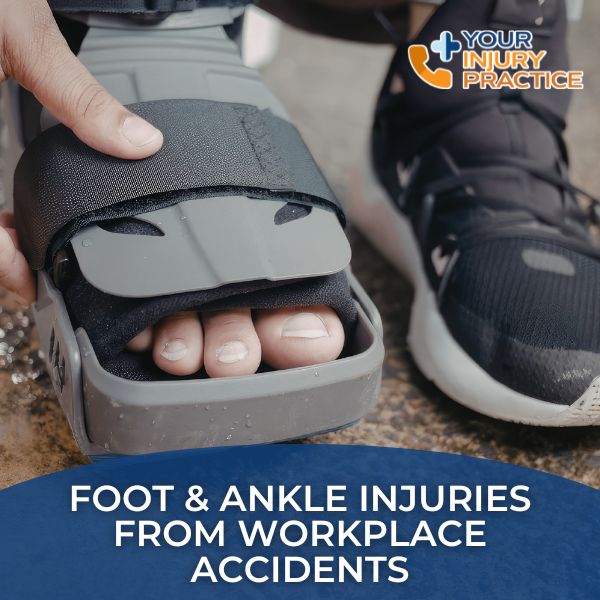
Foot and ankle injuries on the job are more common and more serious than most people realize. From construction sites and warehouses to restaurants and office environments, various workplace hazards put your feet and ankles at risk every single day. A foot or ankle injury can sideline you for weeks or months, affect your ability to earn a living, and in severe cases, result in long-term disability. This article breaks down the most common types of workplace foot injuries, what causes them, how they’re treated, and what your rights are when it comes to workers’ compensation. Whether you’ve already been hurt or want to protect yourself going forward, this guide is worth reading from start to finish.
At Your Injury Practice, our multidisciplinary network of injury doctors across New York and New Jersey specializes in treating work-related foot and ankle injuries — and helping injured workers navigate the no-fault and workers’ compensation systems with confidence.
How Common Are Foot and Ankle Injuries in the Workplace?
Foot injuries in the workplace are far more prevalent than most employers acknowledge. According to the Bureau of Labor Statistics, foot and ankle injuries account for tens of thousands of lost workdays annually across the United States. These injuries are among the leading causes of missed time from work, second only to back injury in many industries.
Feet and ankles bear the full weight of the body throughout the workday, and the repetitive stress of standing, walking, lifting, and maneuvering in physically demanding environments places them at constant risk. Injuries can occur suddenly — from a single traumatic event — or develop gradually over time due to repetitive strain. Either way, the consequences for injured workers can be significant, affecting not just physical health but financial stability and quality of life.
The good news is that workers’ compensation exists specifically to protect employees hurt on the job. Understanding your rights after a foot or ankle injury at work is the first step toward getting the medical care and compensation you deserve.
What Are the Most Common Types of Foot and Ankle Injuries at Work?
The types of foot and ankle injuries seen in workplace settings vary widely depending on the industry and job duties involved. Among the most frequently reported are fractures, sprains, strains, crush injuries, tendon injuries, and puncture wounds from sharp objects.
A fracture whether of a metatarsal, the heel bone, or the ankle is one of the most serious and disabling injuries a worker can sustain. Ankle sprains, while often perceived as minor, can involve significant ligament damage that, if untreated, leads to chronic instability. A strain affecting the muscles and tendons of the foot may seem manageable at first but can worsen considerably without proper medical treatment. Crush injuries, often seen when a foot is caught in machinery or struck by falling objects, may require surgery and carry a real risk of permanent disability.
Less acute but equally impactful conditions include plantar fasciitis inflammation of the connective tissue along the bottom of the foot — and tendinopathy, which involves inflammation of the tendons from repetitive overuse. These work-related conditions are just as compensable as traumatic injuries under most workers’ compensation frameworks.
What Are the Most Common Causes of Foot and Ankle Injuries on the Job?
The causes of foot and ankle injuries in workplace environments are as varied as the industries themselves. Common ones include slip and fall accidents on wet or uneven surfaces, trip and fall incidents caused by cluttered walkways or poor lighting, falling objects striking the foot, and accidents involving heavy machinery. Construction workers, warehouse staff, healthcare workers, and food service employees are among the most frequently affected.
Slip and fall accidents are a leading driver of ankle injury claims across virtually every industry. A wet floor, an unmarked step, or a slick outdoor surface can cause a worker to roll or twist the ankle with enough force to produce a sprain, fracture, or tendon tear. Common workplace foot injuries also arise from improper footwear when workers are not provided with or required to wear appropriate protective footwear, the risk of accidents rises dramatically.
Repetitive motion is another major contributor to work-related foot and ankle conditions. Workers who spend long hours on their feet — nurses, retail employees, delivery workers — are especially vulnerable to developing plantar fasciitis, stress fractures, and tendon injuries over time. These injuries on the job may not have a single moment when the injury occurred, but they are no less legitimate as compensation injuries.
Can Workplace Hazards Lead to Permanent Disability?
Yes — and this is an aspect of workplace foot injuries that is often underestimated. Severe ankle and foot injuries that are not promptly and properly treated can lead to long-term complications including chronic pain, nerve damage, joint instability, and in the most serious cases, amputation. Each of these outcomes can result in permanent disability that fundamentally alters a worker’s ability to perform their job duties and maintain their livelihood.
Crush injuries, in particular, carry a high risk of amputation when vascular or structural damage is too extensive to repair. Even injuries that don’t reach that threshold can result in permanent partial disability meaning the worker retains some function but is unable to return to their prior level of capacity. Ankle surgery may be required following severe fractures or complete ligament tears, and even with surgery, full recovery is not guaranteed.
Injuries can severely limit a worker’s ability to stand, walk, climb, or carry essential functions in many physically demanding occupations. Workers and employers alike need to understand that timely medical attention and appropriate rehabilitation are not optional; they are critical to minimizing the risk of long-term harm and supporting the strongest possible return to work outcome.
What Should You Do Immediately After a Foot or Ankle Injury at Work?
The steps you take in the hours and days immediately following a work injury can significantly impact both your recovery and the success of any future comp claim. The most important thing to do first is report the injury to your employer as soon as possible. Delays in reporting can complicate the workers’ compensation process and create unnecessary disputes about whether the injury is work-related.
Next, seek medical attention promptly even if the injury seems minor at the time. Many ankle and foot injuries that feel like a mild sprain in the moment turn out to involve a fracture, tendon damage, or other structural injury that only becomes apparent on imaging. Your Injury Practice offers comprehensive diagnostic evaluation for work-related foot and ankle injuries, accepting workers’ comp and no-fault insurance directly so there’s no barrier to getting the care you need.
Document everything: the circumstances in which the injury occurred, any witnesses present, the footwear you were wearing, and any workplace hazards that contributed to the incident. This documentation becomes essential if your workers’ compensation claim is disputed or if you need to pursue additional legal remedies down the line.
What Does Workers’ Compensation Cover for Foot and Ankle Injuries?
Workers’ compensation is a state-mandated insurance system designed to cover the medical expenses and lost wages of employees injured at work. For foot and ankle injuries, a valid workers’ compensation claim can cover the full cost of medical care including emergency treatment, imaging, specialist visits, physical therapy, and ankle surgery if required — as well as a portion of wages lost due to time away from work.
The scope of workers’ compensation for foot and ankle injuries also extends to disability benefits. If a worker sustains a permanent partial disability as a result of their foot or ankle injury, they may be entitled to ongoing compensation that reflects their reduced earning capacity. Injured workers who are unable to return to their previous role due to functional limitations may also qualify for vocational rehabilitation support.
Filing a workers’ compensation claim or a workers’ compensation for foot injuries specifically requires adherence to strict procedural rules. Deadlines for reporting and filing vary by state, and missteps in the process can jeopardize your claim. That’s why connecting with the right medical and legal support from the outset is so important.
How Can a Workers’ Compensation Lawyer Help With Your Foot Injury Claim?
Navigating the workers’ compensation system after a foot or ankle injury can be far more complex than it appears. Insurance companies routinely challenge comp claims, dispute whether an injury is work-related, or attempt to minimize disability ratings in order to reduce payouts. Having a workers’ compensation lawyer in your corner significantly improves your ability to secure the full compensation they need to recover.
A compensation lawyer who specializes in work-related foot and ankle injuries understands how to gather and present medical evidence, negotiate with insurance adjusters, and if necessary, advocate for injured workers at hearings and appeals. They can help you understand your rights under your state’s workers’ comp framework and ensure you don’t settle for less than you’re entitled to.
Your Injury Practice works alongside trusted compensation law firms across New York and New Jersey to support injured workers from initial treatment through the resolution of their comp cases. Our injury doctors provide thorough clinical documentation that forms the evidentiary foundation of a strong workers’ compensation claim helping workers secure the benefits they need to heal and move forward.
What Medical Treatment Do Foot and Ankle Injuries Typically Require?
The medical treatment required for a foot or ankle injury sustained at work depends on the type and severity of the injury. Mild sprains and strains typically respond well to conservative management rest, compression, elevation, anti-inflammatory therapy, and structured physical therapy to restore range of motion and rebuild strength. More significant fractures may require immobilization in a boot or cast, and in some cases, surgical fixation.
Tendon injuries, including partial or complete tendon tears, often require a combination of immobilization, progressive rehabilitation, and potentially surgical repair depending on severity. Crush injuries may require multiple surgical procedures and extended periods of medical care before a return to work is feasible. Plantar fasciitis, while not traumatic, requires a consistent treatment program including stretching, orthotics, corticosteroid management, and activity modification.
At Your Injury Practice, our providers across chiropractic, physical therapy, orthopedics, and pain management work collaboratively to deliver coordinated, evidence-based care for workplace foot and ankle injuries. We prioritize getting injured workers back on their feet and back to work as safely and efficiently as possible, while building the medical record needed to support a successful workers’ comp claim.
How Long Does It Take to Recover from a Work-Related Foot or Ankle Injury?
Recovery timelines for work-related foot and ankle injuries vary considerably based on the type of injury, the treatment received, and the individual’s overall health. A mild ankle sprain may resolve within two to six weeks with appropriate care, while a complex fracture or ankle surgery can require six months or more of recovery and rehabilitation before an injured worker is cleared to return to work.
Injuries in the workplace that are not promptly treated or that receive inadequate rehabilitation often take longer to heal and carry a higher risk of complications including chronic pain, instability, and reinjury. This is why medical care from qualified injury specialists, initiated as early as possible after the injury, is so critical to both the health and legal outcomes of a workers’ compensation case.
Your Injury Practice is designed to streamline this process. With locations across Long Island, New York City, and New Jersey, and providers who understand the intersection of clinical care and workers’ compensation law, we help injured workers access the treatment they need without unnecessary delays or administrative barriers.
Why Choose Your Injury Practice After a Workplace Foot or Ankle Injury?
When you’ve sustained a foot or ankle injury at work, choosing the right medical provider matters both for your physical recovery and for the integrity of your workers’ compensation claim. Your Injury Practice is a multidisciplinary injury network with deep experience treating work-related foot injuries, ankle and foot fractures, tendon injuries, crush injuries, and all manner of ankle injury presentations resulting from workplace accidents.
We accept no-fault insurance and workers’ compensation directly, meaning you can access expert medical care immediately after your injury without worrying about upfront costs. Our providers document your injuries thoroughly and work collaboratively with compensation law firms to ensure that your workers’ comp claim reflects the true extent of your injuries and their impact on your ability to work.
If you’ve been injured at work and need a compensation claim evaluation, or if you’re simply looking for expert medical care for a foot or ankle injury, contact Your Injury Practice today. We have locations across New York and New Jersey, and our team is ready to help you understand your rights and get the compensation and care you deserve.
Key Takeaways: Workplace Foot and Ankle Injuries
- Foot and ankle injuries are among the most common work-related injuries, responsible for significant missed time from work each year
- Common types include fractures, sprains, strains, crush injuries, tendon injuries, plantar fasciitis, and puncture wounds from sharp objects
- Slip and fall accidents, falling objects, machinery accidents, and repetitive strain are the leading causes of foot and ankle injuries in the workplace
- Severe injuries can result in permanent disability, amputation, or the need for ankle surgery making early medical attention critical
- Always report the injury to your employer immediately and seek medical care without delay
- Workers’ compensation covers medical expenses, lost wages, and disability benefits for eligible injured workers
- A workers’ compensation lawyer can help protect your rights and maximize your comp claim, especially if your claim is disputed
- Your Injury Practice accepts workers’ comp and no-fault insurance, offering multidisciplinary care across New York and New Jersey
- The sooner you begin treatment and document your injuries, the stronger your path to recovery and compensation will be
- Contact Your Injury Practice to connect with experienced injury doctors and get the support you need to heal and move forward