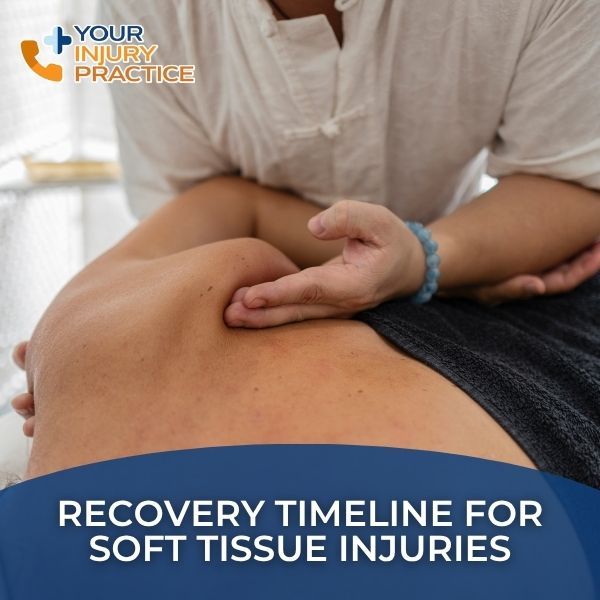
How Long Does It Take for Soft Tissues to Heal? A Complete Guide to Soft Tissue Injury Recovery
Soft tissue injuries are among the most common musculoskeletal complaints seen in orthopedic and sports medicine practices — yet they remain widely misunderstood by patients. Whether you’ve rolled an ankle, pulled a muscle, or strained a tendon in a car accident or workplace incident, understanding the body’s tissue healing process can make the difference between a smooth recovery and one that drags on longer than expected. At Your Injury Practice, our multidisciplinary network of injury doctors — spanning physical therapy, pain management, orthopedics, neurology, and chiropractic care — guides patients across New York and New Jersey through every stage of soft tissue healing. This guide walks you through everything you need to know, from the biological stages your body undergoes to evidence-based strategies that help get you back on track as quickly and safely as possible.
What Are Soft Tissues and Why Do Soft Tissue Injuries Matter?
Soft tissues refer to the structures in the body that connect, support, and surround bones and organs — including muscles, tendons, ligaments, fascia, and connective tissue. Unlike bone, which has a relatively predictable healing timeline, soft tissues vary enormously in how they heal based on type, location, and blood supply.
Soft tissue injuries are incredibly common across all age groups and activity levels. They can result from sports, workplace accidents, falls, personal injury incidents, auto accidents, or even repetitive daily movement. When left unaddressed or improperly managed, they can debilitate a patient for months and lead to chronic pain, reduced function, and a higher risk of reinjury.
Understanding what you’re dealing with — and taking an evidence-based clinical guideline approach to recovery — is the first step toward healing well. At Your Injury Practice, our team is experienced in treating the full spectrum of soft tissue damage resulting from no-fault accidents and workers’ compensation cases throughout New York and New Jersey.
How Long Does It Take to Recover from a Soft Tissue Injury?
One of the most frequently asked questions we hear at Your Injury Practice is: how long does it take to heal? The answer depends heavily on the type and severity of the tissue involved. Minor soft tissue injuries, such as a mild strain or sprain, may resolve within a few days to two weeks. More significant injuries — like a torn ligament or tendon — can take anywhere from several months to over a year.
As a general benchmark, soft tissue injuries heal at a rate 2–11 times slower than bone fractures, depending on the structure affected. Tendons and ligaments, which have a relatively poor blood supply compared to muscle, tend to take longer. The first few days after injury are particularly critical: this is when the body initiates the inflammatory response that triggers tissue repair, and how you manage this period greatly influences what comes next.
Recovery from a soft tissue injury isn’t linear. Patients often feel better before they are fully healed — one of the most common reasons for setbacks we see in our clinics. Our injury doctors work to ensure patients don’t cut their care short before true tissue healing has been achieved.
What Are the Four Main Stages of Soft Tissue Healing?
The body’s tissue healing process follows four main stages: hemostasis, inflammation, proliferation, and remodeling. Each phase is distinct, and each one must complete properly for the next phase of healing to begin.
During hemostasis — the immediate response — the body works to control bleeding and protect the damaged soft tissues. Inflammation follows, lasting from a few hours to several days after injury. Despite its bad reputation, inflammation and swelling are normal after an injury; they signal the immune system to clear debris and begin repair.
In the proliferation phase, the body lays down new scar tissue to bridge the gap left by the injury. This new scar tissue is structurally weaker than the original tissue and must be carefully remodeled during the final phase. The remodeling phase can last months or even years, during which the body works to remodel the new scar and get it as close to the original tissue structure as possible — ideally making it behave like the structure it’s replacing. The physical therapy and rehabilitation specialists within the Your Injury Practice network are trained to support patients through all four of these phases.
What Is the Difference Between a Strain and a Sprain?
A strain involves injury to muscles and tendons, while a sprain involves injury to ligaments — the connective tissue that holds joints together. Both are classified as soft tissue injuries, and both follow the same four-phase healing process, but they differ in symptoms, severity grading, and treatment approach.
A mild strain or sprain may only affect a small percentage of tissue fibers, causing localized pain and swelling with minimal functional loss. A Grade III sprain, on the other hand, involves complete rupture of the ligament and may require surgical intervention. Muscles and ligaments heal differently — muscles, with their better blood flow, tend to recover faster than ligaments or tendons.
Sports medicine professionals and orthopedic specialists within the Your Injury Practice network evaluate soft tissue injuries using clinical examination, imaging, and functional testing to determine grade severity and develop an appropriate plan of care. If you’ve sustained a strain or sprain as a result of a car accident or work-related injury in New York or New Jersey, our no-fault and workers’ compensation doctors are ready to help.
How Do Compression and Elevation Help Soft Tissue Injuries Heal?
The RICE protocol — Rest, Ice, Compression, Elevation — has long been the standard first-response approach to soft tissue injuries. More recently, updated frameworks such as PEACE & LOVE and the PRICE protocol have refined these recommendations, but compression and elevation remain foundational.
Compression helps reduce swelling and pain and supports the injured area during the early healing stages. Applying gentle compression using a bandage or tubigrip can assist in managing inflammation and providing structural support. Elevation reduces fluid accumulation in the injured tissues, helping to minimize swelling and pain in the days after injury.
Anti-inflammatory strategies — including the use of an ice pack, elevation, and when appropriate, anti-inflammatory medication — can reduce the pain and swelling that often peak in the first 72 hours. The pain management specialists at Your Injury Practice can guide patients through appropriate anti-inflammatory protocols tailored to their specific injuries, always in coordination with their broader treatment plan.
What Is the PEACE & LOVE Approach to Recovery?
PEACE & LOVE is a modern, evidence-based framework developed in response to newer research on soft tissue healing. It stands for: Protect, Elevate, Avoid anti-inflammatory modalities (in some phases), Compress, Educate — followed by Load, Optimism, Vascularization, and Exercise.
The PEACE & LOVE approach reflects a shift in thinking about how we treat soft-tissue injuries. Rather than prolonged rest and aggressive use of cryotherapy, current evidence supports early, progressive movement. It’s important to rest in the acute phase to allow bleeding to stop and initial repair to begin — but extended immobilization can actually impair healing.
The “Load” component encourages patients to continue with activities as pain allows and keep the injured area moving within a comfortable range of motion. This helps trigger the next phase of healing, prevent stiffness, and promote healthy tissue remodeling. At Your Injury Practice, our physical therapy specialists integrate this approach into personalized rehabilitation plans designed to reduce the risk of new scar tissue forming in restrictive patterns that limit long-term function.
Does Blood Supply Affect How Quickly Soft Tissues Heal?
Yes — significantly. One of the most important biological factors in soft tissue healing is vascular supply. Tissues with a good blood supply, like muscle, tend to heal faster because oxygen and nutrients are delivered more efficiently to the injured area. In contrast, tendons and ligaments receive relatively little direct blood flow, which is a primary reason these structures can take so much longer to heal.
This is also why treatment of ankle sprains, for example, must be carefully managed. The lateral ligaments of the ankle have limited vascularity, meaning incomplete healing is common when rehabilitation is rushed or abandoned after symptoms appear to resolve after a couple of weeks.
Rehabilitation of soft-tissue injuries should include vascularization exercises — low-load aerobic activity that promotes blood flow without stressing the healing tissue. The chiropractic and physical therapy providers within the Your Injury Practice network incorporate these techniques into care plans, ensuring that damaged soft tissues receive the circulatory support they need to recover fully.
What Role Does Exercise Play in Soft Tissue Healing?
Exercise is one of the most powerful tools available for soft tissue recovery — when applied at the right time and intensity. In the early phase, movement helps prevent excessive scar formation and maintains range of motion in the surrounding joints. As healing progresses, targeted treatment and exercises help to restore mobility and begin to build strength and flexibility in the recovering structure.
Treating soft-tissue injuries without a progressive exercise component often results in incomplete recovery. Scar tissue formed during healing is initially disorganized and fragile; exercise applies controlled mechanical stress that helps remodel the new scar into aligned, functional tissue that can behave like the structure it replaced.
Nerve damage is sometimes a complication of more significant soft tissue injuries, particularly if swelling compressed nearby neural structures. Your Injury Practice’s neurology network specializes in identifying and treating accident-related nerve involvement, ensuring that patients with complex soft tissue and neurological presentations receive integrated, comprehensive care.
How Long Does Scar Tissue Take to Repair Your Injury Fully?
Scar tissue formation begins within days of an injury, but the remodeling process that follows can take 12–24 months depending on the severity and tissue type. Understanding this timeline is essential for setting realistic patient expectations. Injuries can cause residual symptoms — particularly stiffness and aching — well beyond the point at which a patient considers themselves “healed.”
The quality of new scar tissue matters enormously. If rehabilitation is incomplete or premature loading causes tissue disruption, the scar tissue to repair your injury may not achieve adequate tensile strength. This is a major risk factor for reinjury, sometimes a year down the line from the original event.
Traumatic injuries, severe injury cases, or injuries that involved complete tissue disruption require the most time and the most careful management. Your Injury Practice’s multidisciplinary approach ensures that patients are never left to navigate this process alone — our providers coordinate across chiropractic, physical therapy, orthopedics, and pain management to guide each patient through a complete and supervised recovery.
When Should You See a Doctor for a Soft Tissue Injury?
Not every sprain or strain requires immediate medical attention, but certain signs warrant prompt evaluation. If you experience significant swelling and pain that doesn’t respond to initial first aid, inability to bear weight or use the injured limb, numbness or tingling (which may indicate nerve damage), or if symptoms don’t improve after a couple of weeks, it’s time to seek professional assessment.
Soft tissue damage can be deceiving — what feels like a minor sprain may involve partial tearing of a tendon or ligament that, if not properly addressed, can lead to chronic pain and instability. Early evaluation allows for accurate diagnosis, grading of injury severity, and initiation of an appropriate approach to recovery.
If your soft tissue injuries resulted from a car accident or work-related incident, Your Injury Practice makes the process seamless. We accept no-fault insurance and workers’ compensation, liaise directly with insurance companies, and connect patients with the right specialists across our New York and New Jersey locations. Don’t wait — contact Your Injury Practice today to schedule an appointment and let our team get you back on track.
Key Takeaways: What to Remember About Soft Tissue Healing
- Soft tissue injuries include damage to muscles, tendons, ligaments, and connective tissue — all of which heal at different rates
- Soft tissue injuries heal 2–11 times more slowly than bone fractures, depending on the structure involved
- Healing follows four main stages: hemostasis, inflammation, proliferation, and remodeling
- The first few days after injury are critical — managing inflammation and swelling appropriately sets the foundation for recovery
- Compression and elevation are foundational tools in early soft tissue management
- The PEACE & LOVE framework emphasizes early, progressive loading rather than prolonged rest
- Good blood supply accelerates healing — tissues like muscle heal faster than tendons and ligaments
- Exercise and rehabilitation of soft-tissue injuries are essential for restoring strength, flexibility, and full function
- New scar tissue must be actively remodeled through progressive loading to reduce the risk of reinjury
- If your injury resulted from a car accident or workplace incident, Your Injury Practice’s no-fault and workers’ compensation specialists are here to help — with locations across New York and New Jersey and a full multidisciplinary care team ready to support your recovery